
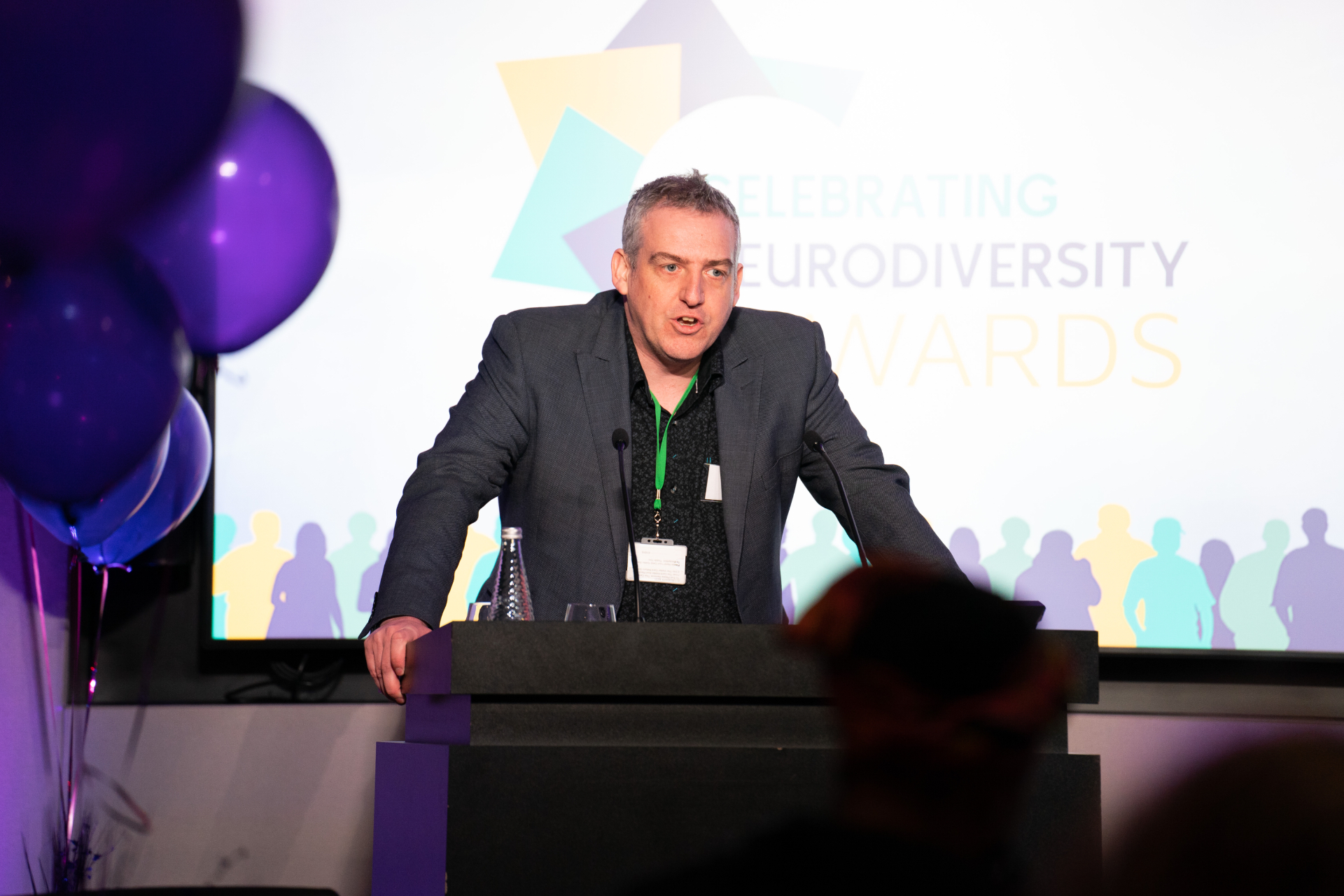
Why organisations bring in a neurodiversity consultant
Most large organisations already employ neurodivergent people. Many also have an established EDI strategy, employee networks, wellbeing initiatives and a genuine ambition to become more inclusive.
The challenge is rarely a lack of good intent. The challenge is turning that intent into an organisation that consistently works for neurodivergent people in practice. That is where a specialist neurodiversity consultant adds value.
Where neuroinclusion often breaks down
In many organisations, neuroinclusion develops in disconnected pockets. HR may own the policy. Occupational Health may manage adjustments. EDI teams may lead awareness activity. Employee networks may provide peer support. Managers are expected to respond appropriately when somebody discloses a condition. Recruitment teams may be introducing more inclusive hiring practices, while transformation teams are simultaneously redesigning roles, structures, processes and ways of working.
Individually, each of these activities can be positive. The difficulty comes when there is no coherent organisational approach connecting them.
A policy may look excellent on paper but prove difficult for managers to apply. An employee may disclose ADHD, dyslexia, autism or another neurodivergent condition but have no clear route to the support they need. Reasonable adjustments can become trapped between managers, HR, Occupational Health, IT and procurement. Leaders may support neuroinclusion in principle but lack the confidence to discuss it with their teams. Recruitment processes may unintentionally screen out highly capable candidates before they ever reach interview.
The result is often a significant gap between the organisation's stated commitment to neuroinclusion and the everyday experience of its people.
The organisational cost of getting it wrong
When neuroinclusion is poorly understood or inconsistently applied, the impact goes far beyond employee experience. It can contribute to avoidable absence, disengagement, reduced performance and the loss of highly capable people.
Neurodivergent employees can spend a significant amount of energy trying to operate within systems, environments and management practices that do not work well for the way they think, process information or communicate. Some choose not to disclose because they are uncertain how that information will be received. Others become frustrated by slow or inconsistent adjustment processes. Some eventually leave the organisation entirely, taking valuable experience, capability and institutional knowledge with them.
Managers can also find themselves exposed. They may be expected to navigate disclosure conversations, performance concerns, reasonable adjustments and complex individual circumstances without ever having been properly trained. Even well-intentioned managers can become hesitant, inconsistent or overly reliant on HR because nobody has clearly shown them what effective neuroinclusive leadership looks like.
At organisational level, those weaknesses can translate into poor employee experience, reduced productivity, increased employee relations cases, higher turnover, legal and tribunal risk, and reputational damage.
Moving from awareness to organisational capability
A neurodiversity consultant helps an organisation understand where these problems are actually occurring rather than simply delivering another awareness session.
The work can examine the complete employee journey, including attraction, recruitment, onboarding, workplace design, management practices, performance, development, promotion, reasonable adjustments, organisational change and retention.
It also means asking some important organisational questions. Where are neurodivergent employees experiencing unnecessary friction? Which processes rely too heavily on one style of communication or working? Are managers genuinely equipped to lead neurodivergent colleagues? Are adjustments implemented quickly enough? Do senior leaders understand the organisational implications of neuroinclusion? And is neuroinclusion embedded into leadership, talent and transformation strategies, or does it still sit primarily within EDI?
The objective is to move the organisation beyond awareness and towards genuine organisational capability.
Why Wayne's approach is different
Wayne's approach combines specialist neurodiversity insight with more than 25 years of experience in organisational change and transformation.
That distinction is important because sustainable neuroinclusion cannot operate as a standalone initiative at the edge of the organisation. It needs to connect with the way the organisation already works: its leadership expectations, governance arrangements, people processes, operating models, transformation programmes and strategic priorities.
Rather than creating a separate neurodiversity programme that generates enthusiasm for twelve months before gradually losing momentum, the focus is on embedding neuroinclusive thinking into the organisation's existing infrastructure.
That could include strengthening leadership capability, redesigning reasonable adjustment pathways, reviewing policies and processes, developing practical manager toolkits, strengthening employee networks, embedding neuroinclusion into transformation programmes, improving recruitment practices or developing an organisation-wide neuroinclusion strategy with clear priorities and measurable outcomes.
Building neuroinclusion that lasts
The goal is not simply to make an organisation appear neuroinclusive. It is to create an organisation where neurodivergent people can join, contribute, progress and perform at their best, and where leaders have the confidence, systems and practical capability to support them consistently.
Done properly, neuroinclusion becomes far more than an EDI commitment. It becomes part of how the organisation attracts talent, develops leaders, delivers transformation, retains expertise and improves organisational performance.